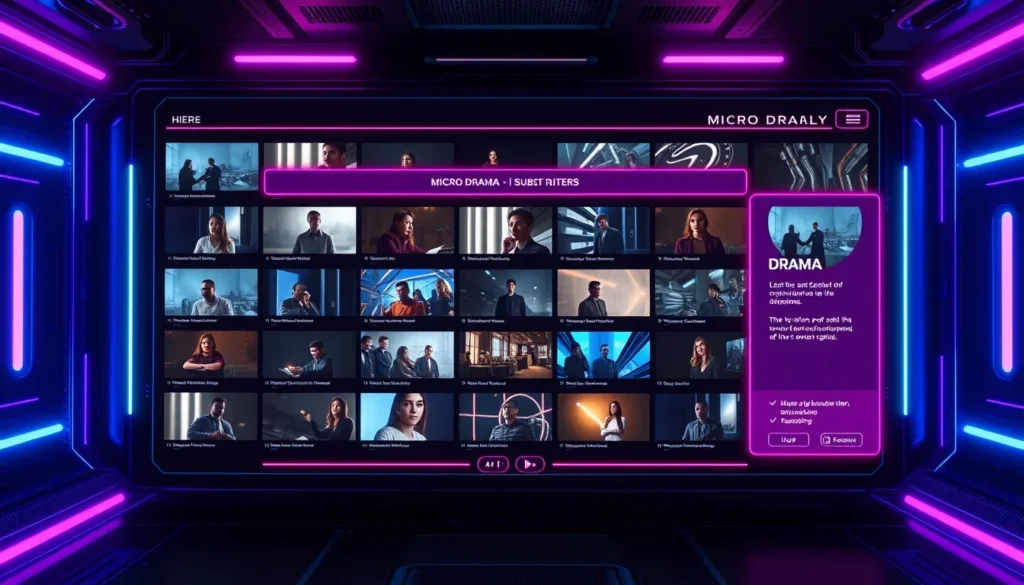
The entertainment industry is undergoing a revolution, and AI video for advertising is becoming its driving force. Shortical, a startup specializing in micro-dramas, actively uses mass video generation by neural networks to create short, two-minute episodes of melodramatic stories. These spicy romances keep viewers glued to their screens, offering a new format for content consumption. Founded last January, the company monetizes through subscriptions: the first 7-10 episodes are available for free, and then full access to the content is unlocked for a small monthly fee. While Shortical previously released live romantic dramas such as “Crossing the Line with the Neighbor” or “Accidentally Married the Boss,” their homepage is now literally filled with AI-generated content.
The reason for this transition is obvious: production costs for AI content production are significantly lower than for live-action filming. This, in turn, increases profit potential, provided a wide audience is attracted. Recently, Shortical premiered a new micro-drama called “Inevitable” in Los Angeles. The lead role is played by Aki Avni, a well-known Israeli actor who has appeared in American TV shows for years (e.g., in the series “24”). Now he is trying something completely new for modern Hollywood: licensing his face to Shortical for AI content creation. This is the first such experience for the startup, but likely not the last.
Face Licensing: A New Era for Actors?
In the “Inevitable” project, entirely created by AI, Aki Avni’s face was used to create his digital avatar. The actor plays himself in a meta-plot where he, Aki Avni, licenses his face to a film studio, after which thriller events unfold. In an interview with TechCrunch, Avni admitted that the project is both exciting and captivating.
“Listen, this is a new era for artists,” the actor stated. “AI is a new art form, a new format. It’s always great to be a pioneer in something.”
Guy Shimoni, CEO of Shortical, emphasizes the creative potential of the new tool. “One of the opportunities that AI provides is the ability for small teams to create cinema-scale productions,” says Shimoni. “When we were shooting live-action for mobile devices, we were limited by budget. Now we can offer epic fantasies. We have kingdoms and dragons, superheroes and werewolves.”
AI vs. Real UGC: Who’s Watching?
AI-generated romantic werewolf stories – who even watches these? Turns out, a lot of people. While China is the world’s largest market for micro-dramas, Shimoni claims that most of his platform’s viewers are in the US. The viewer demographic is heavily skewed towards women.
Many watch these videos to relax in the evening, getting small doses of dopamine before bed. Many AI programs on the company’s website already have millions of views.
Face Licensing Market: Prospects and Risks
A Shortical representative told TechCrunch that this offering is “in its early stages and has not yet resulted in signed contracts.” He added: “The series with Aki is the first time Shortical has used the image of a real person, and this was done through a direct agreement with him, not through a platform. Shortical hopes that the series will draw more attention to face licensing and plans to promote this offering more actively after launch.”
This trend is already widespread in China, where the micro-drama industry originated, where AI-generated content is very popular, and face licensing is already a trend. However, for creators, it is not always profitable. A recent Rest of World report showed that micro-drama companies pay between $15 and $700 USD for licensing facial images. Shortical does not disclose how much they offer for such deals. As for royalties, Shimoni evasively replies: “It’s a case-by-case approach.”
“For anyone looking to get investment in micro-dramas right now, you have to mention the word AI. It’s like AI equals gold in everyone’s eyes,” — Jennifer Cooper, founder of Vertical Drama Love.
A Shortical representative explained to TechCrunch that the company does not want to “name a specific amount” for Avni’s contract. However, he came “as a partner in the project, and his compensation was in line with industry standards for a comparable non-AI acting role.” For other actors, the terms may be very different. This raises concerns among many creative professionals who see automation penetrating their industry.
Previously, micro-dramas were considered a safe starting point for young actors to gain experience. Now, companies are cutting staff and producing content that doesn’t even require live actors.

The Future of Neuro-Production: Scaling and Ethics
Jennifer Cooper, a long-time industry enthusiast and founder of the consulting firm Vertical Drama Love, notes a great deal of distrust towards AI from both the audience and within the micro-drama industry itself. “Everyone has been hurt by AI,” she says. “Many of us have either lost our jobs to AI or see it as having devastated this industry, turning micro-dramas from a rare, growing phenomenon that provided jobs, especially to young people, into something that has been destroyed.”
Consent issues when using AI images also plague the industry (some creators claim their images have been stolen), and this is something Shortical is trying to address with its new face licensing project. However, these licensing deals can also contribute to the “gigification” of the industry, creating a scenario where creators pay a distributor for the opportunity to host their content (or their face) and then get paid based on the audience engagement they are allowed to generate.
Shortical recently partnered with Payouts.com, which describes itself as a “payout infrastructure platform enabling scalable payouts to creators and the gig economy.” The plan is to create a system through which creatives can seamlessly interact with the Shortical platform and get paid.
Cooper believes that the drive for AI in the industry is fueled by broader financial trends. Much of the micro-drama business is run by startups, and venture capitalists like to hear about growth plans that include automation. Despite all the investment in this area, Cooper is skeptical that there is a huge audience for this kind of content. “Some of it gets views. A lot of it doesn’t,” she says about AI content. “I think it’s being pushed on audiences more than there is an audience demand or desire for it.”
Frequently Asked Questions
What is AI video for advertising?
AI video for advertising refers to commercials created using artificial intelligence, which can generate scripts, characters, voiceovers, and even fully animated scenes. This allows for mass video generation by neural networks at high speed and low cost.
How much does one AI creative cost?
The cost of an AI creative varies significantly depending on complexity, duration, and the technologies used. It can be many times lower than traditional production, making AI production by subscription attractive to many companies. Shortical does not disclose specific figures but indicates significant savings.
Where can I order AI content production for crypto?
For crypto projects interested in AI UGC for crypto projects or mass video generation, there are specialized studios and platforms offering services for creating AI commercials and other content. It is important to look for providers who understand the specifics of the crypto industry and can ensure high quality and uniqueness.
What is an AI avatar with subtitles and AI voiceovers?
An AI avatar with subtitles and AI voiceovers is a digital character created by artificial intelligence that can speak with a synthesized voice and automatically generate subtitles. This allows for the creation of personalized videos without the involvement of real actors.
Can a neural network write scripts and edit videos?
Yes, modern neural networks are capable of writing scripts and editing videos. They can analyze data, generate storylines, select visuals, and even perform basic editing, significantly speeding up the content production process.
Conclusion
The micro-drama industry is at a turning point where video generation from text and the use of animated AI characters are becoming the new norm. The example of Shortical with Aki Avni shows that the future of Hollywood may involve licensing faces for AI content creation. This opens up enormous opportunities for scaling production, creating «AI video factories for e-commerce,» and AI conveyors capable of producing 500 videos per day. However, questions remain regarding ethics, actor compensation, and real audience demand. We are on the verge of a new era where AI video for advertising and entertainment will rapidly develop. If you are looking for effective solutions for video content creation, consider the possibilities of mass video generation by neural networks. This could become your competitive advantage.