Copyright in the age of artificial intelligence is a topic that sparks heated discussions and presents new challenges for lawyers and creators. Recently, the Moscow City Court issued a landmark decision that sheds light on this complex issue, confirming that only a human can be the author of a work, not a neural network. This decision is of great importance for everyone working with AI content and striving to protect their intellectual rights.
The Judicial Panel for Civil Cases of the Moscow City Court on 24.08.2026 (case No. 33-33231/2026) overturned the decision of the Presnensky District Court, partially satisfying the claim for infringement of exclusive rights to derivative works.
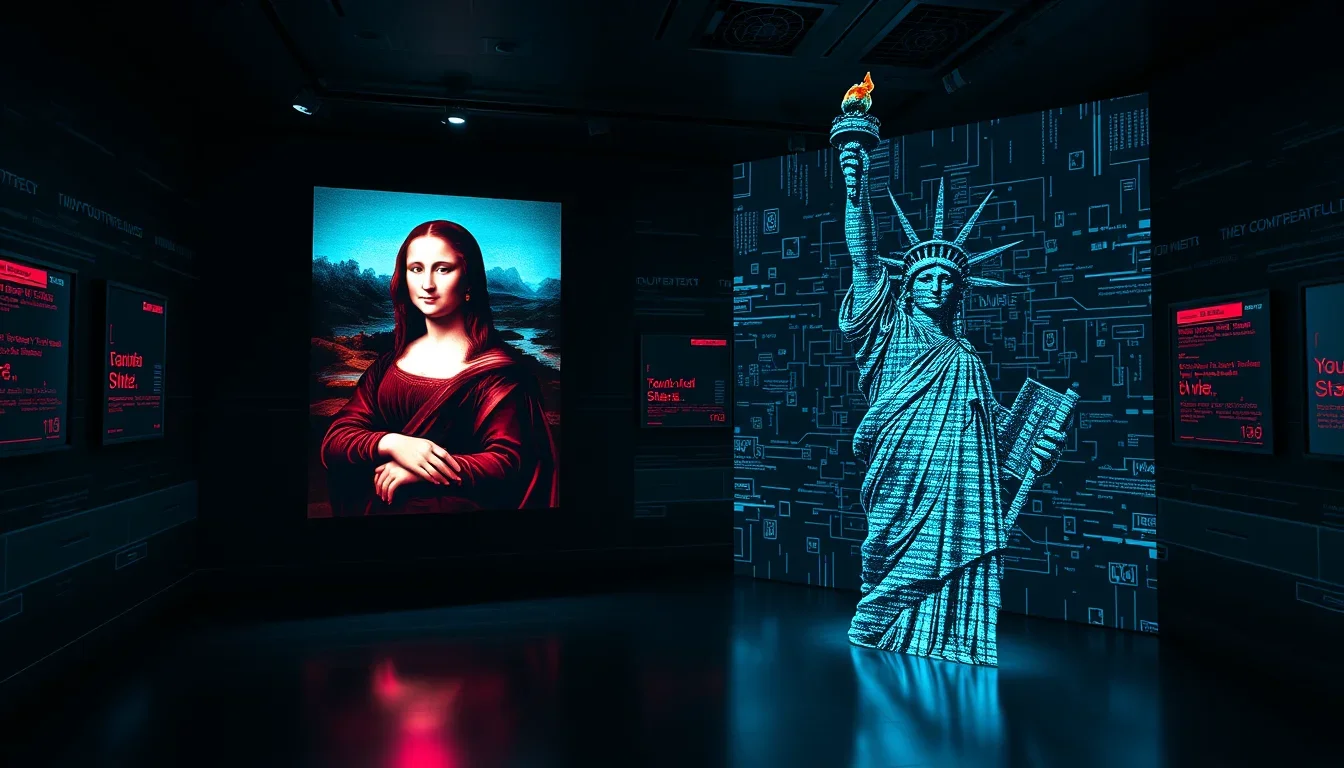
The essence of the case was the defendant’s unlawful use of the plaintiff’s art objects – «Mona Lisa with Wine» and «Statue of Liberty with Wine.» The plaintiff claimed to have created these works by reinterpreting well-known images. The defendant, in turn, insisted on the insignificance of the changes and the absence of creative contribution. A key point was the mention of artificial intelligence as a possible creator.
The first instance and appeal courts differed in their opinions regarding the role of AI in the creation of works. This demonstrates the complexity of interpreting existing laws in the face of rapidly developing technologies.
First instance position: AI as creator
“The computer program in this case is the creator of the work, accordingly, the objects indicated by the plaintiff were created using artificial intelligence. In this case, the plaintiff, as a user, wrote a query for the neural network to create an image, and accordingly, the objects were created by a computer program – artificial intelligence.”
The Presnensky District Court considered that if an object was created with the help of AI, it is not the result of human creative activity. The court referred to the fact that “results created with the help of technical means in the absence of the creative nature of human activity are not objects of copyright.”
Appellate position: AI as a tool
The Moscow City Court took a different position, emphasizing that only a citizen, whose creative labor created the result, can be the author. The appeal pointed out the error in equating a “computer program” with “generative artificial intelligence.”
Human creative labor: According to Article 1228 of the Civil Code of the Russian Federation, only a citizen is recognized as an author. The creative nature does not depend on the use of technical means, but the absence of human creative contribution excludes the recognition of an object as copyright.
Adobe Photoshop is not AI: The court emphasized that Adobe Photoshop is a tool, not an independent creator. “The program is merely a technical medium for realizing the author’s creative intent, and not an independent creator of the work.”
Date of creation: A significant argument was that the plaintiff’s works were created in 2017–2018, when generative AI tools were not publicly available. This refutes the claim of using a neural network to create images.
Special knowledge: The question of creative contribution requires special knowledge in art history and graphic design, not subjective judgment.
Key findings of the appellate decision
The Moscow City Court concluded that the plaintiff, through manual work in a graphic editor, created derivative works, introducing author’s changes that form a new artistic and semantic perception. These works are recognized as independent objects of the plaintiff’s copyright in accordance with Articles 1259, 1260 of the Civil Code of the Russian Federation.
“The plaintiff, through manual work in a graphic editor, created derivative works, introducing into the original images a volume of author’s changes that form a new artistic and semantic perception. These works are independent objects of the plaintiff’s copyright in accordance with Articles 1259, 1260 of the Civil Code of the Russian Federation.”
This decision confirms that a neural network, even if used for processing, is not the author. AI content production, mass video generation by neural network or AI video for advertising, where a person acts as an operator or scriptwriter, still implies that the author is a human. This opens up new prospects for neuro-production by subscription and AI UGC for a crypto project, where it is important to clearly delineate the role of technology and the creator.
Frequently Asked Questions
Is artificial intelligence the author of a work?
No, according to Russian law (Article 1228 of the Civil Code of the Russian Federation), only a citizen – a person whose creative labor created such a result – can be the author of an intellectual activity result. AI is considered a tool.
Can neural networks be used to create content and retain copyright?
Yes, if the neural network is used as a technical means to realize a person’s creative intent. Your creative contribution, expressed in the choice of idea, correction, editing, and final design, is the basis for recognizing you as the author.
What is the difference between Adobe Photoshop and generative AI?
Adobe Photoshop is a graphics editor where every action is performed manually by the user. Generative AI creates content based on text prompts or other input data, but does not inherently possess consciousness or creative intent.
What is the cost of 1 minute of AI video and does it affect authorship?
The cost of 1 minute of AI video can vary greatly depending on the complexity, technologies used, and platform. However, the cost or method of creation (whether it’s an AI avatar with subtitles or video generation from text) does not affect the legal recognition of authorship. Authorship remains with the person who made the creative contribution.
Conclusion: Human – creator, AI – tool
This decision by the Moscow City Court confirms a fundamental principle: the human remains the key link in the creative process. The effectiveness of AI versus real UGC can be high, but legally it is the human, not the neural network, who is the author. If you create content using AI, remember that your creative contribution is the basis for protecting your rights.
Scaling content with an AI conveyor belt of 500 videos per day is now possible, but authorship always remains with you. The mass generation API allows you to create thousands of videos, but each of them must bear the imprint of human intent. Order AI UGC for a crypto project, but don’t forget your creative contribution and protect your copyrights!